


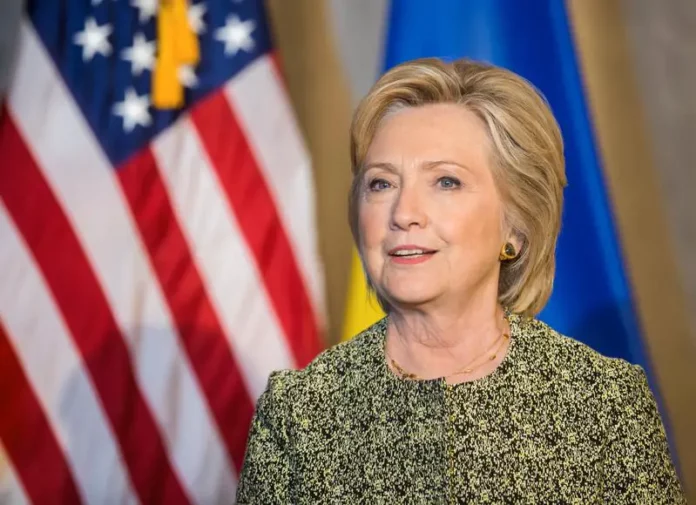
Former Secretary of State Hillary Clinton delivered a pointed rebuke to the progressive wing of the Democratic Party during a Friday interview, warning that the far left’s pattern of withholding support from establishment nominees threatens the party’s ability to win general elections — and that Republican attacks branding Democratic candidates as socialists or communists are poised to be devastatingly effective.
Clinton’s remarks came during an appearance on the “Pivot” podcast, hosted by tech journalist Kara Swisher, who raised the growing friction between the Democratic Party’s establishment and progressive factions — a divide that Republican strategists have openly moved to exploit heading into the 2026 midterms.
Clinton Calls Out a ‘One-Way Street’
The former presidential nominee acknowledged that the Democratic Party’s ideological breadth can be a genuine strength, but insisted that strength means nothing if it cannot be converted into electoral victories. Clinton said the Republican Party has become the Trump cult while the Democratic Party remains a bigger tent with a broad cross-section of people and beliefs — an advantage, but only if the party can win general elections.
She took direct aim at a pattern she described as a recurring problem: when progressive candidates lose primaries, their supporters too often refuse to rally behind the party’s eventual nominees. Clinton pointed to her own 2016 campaign as an example, noting there was significant reluctance among some on the left to back her after she secured the nomination. She made a similar observation about the resistance Kamala Harris faced from parts of the progressive base. The arrangement, Clinton argued, cannot function as a one-way obligation that only flows toward progressives.
The comments arrive at a particularly charged moment for the party. In Michigan, progressive candidate Abdul El-Sayed won the Democratic primary for the state’s U.S. Senate seat, defeating establishment-backed Rep. Haley Stevens — a race that has become a flashpoint in the broader internal battle. Clinton noted that El-Sayed’s path to defeating Republican Mike Rogers in November will require persuading a large share of Stevens’ supporters, many of whom El-Sayed’s backers had publicly criticized during the primary campaign. Figures like progressive political commentator Hasan Piker have been demanding loyalty to the progressive standard-bearer, which Clinton’s comments appeared to push back against sharply.
Clinton told Swisher that close primary winners who need the defeated candidate’s voters will have to engage in conversation to bring those people over.
Republican Messaging Could Hit Hard
Beyond the unity question, Clinton flagged a strategic vulnerability she believes Democrats are underestimating. Republican messaging that labels Democratic candidates as communists or socialists, she warned, is not just political noise — it is likely to resonate with persuadable voters in a general election. She argued that the rise of figures like New York City Mayor Zohran Mamdani gives Republicans ready-made material to work with, and that Democratic candidates who emerge from the left will need to be prepared for a sustained and effective line of attack.
Clinton said she believes Republicans keep hammering that messaging precisely because it works, and she cautioned Democrats against dismissing the threat as empty scare tactics. While she acknowledged the attacks did not prevent Mamdani’s rise, she stressed the general election environment is a different challenge entirely from winning a Democratic primary.
The Michigan Race as a Test Case
The Michigan Senate contest is shaping up as one of the most closely watched races of the 2026 cycle, and it encapsulates precisely the tensions Clinton described. El-Sayed will need to build a broad coalition that includes independents and voters who backed Stevens — many of whom may not be natural supporters of his more progressive policy positions. The challenge of reintegrating those voters while fending off Republican attacks from President Donald Trump’s party will test whether the Democratic coalition Clinton described can actually hold together when it counts.
Clinton’s willingness to state the case so bluntly reflects growing anxiety within the party’s center about the cost of ideological purity heading into what promises to be a competitive midterm environment.
Clinton and the Broader Democratic Divide
Clinton’s comments on the “Pivot” podcast are unlikely to settle the tensions she described. The fault lines between the party’s establishment and progressive wings have deepened since the 2016 campaign, and the dispute over whether figures like El-Sayed or Mamdani represent a liability or an asset has only grown louder. Progressive activists have argued that enthusiasm on the left is essential for turnout, while establishment voices insist that the party cannot afford to alienate the moderate voters who decide general elections.
Separately, Clinton remains a figure in ongoing legal proceedings. President Trump has signaled he intends to ask the Supreme Court to revive his lawsuit accusing Clinton, the Democratic National Committee, and others of conspiring to damage his 2016 campaign with false claims of Russian collusion. The 11th U.S. Circuit Court of Appeals had previously ruled against the lawsuit and imposed almost $1 million in sanctions on Trump and his attorney Alina Habba, calling the suit frivolous. Trump filed a request on July 30, 2026, for additional time — until Sept. 9, 2026 — to seek Supreme Court review of that ruling. Whether that legal backdrop adds urgency or distraction to Clinton’s public reemergence as a party critic remains an open question, but her voice in the intra-Democratic debate was unmistakably direct on Friday.