


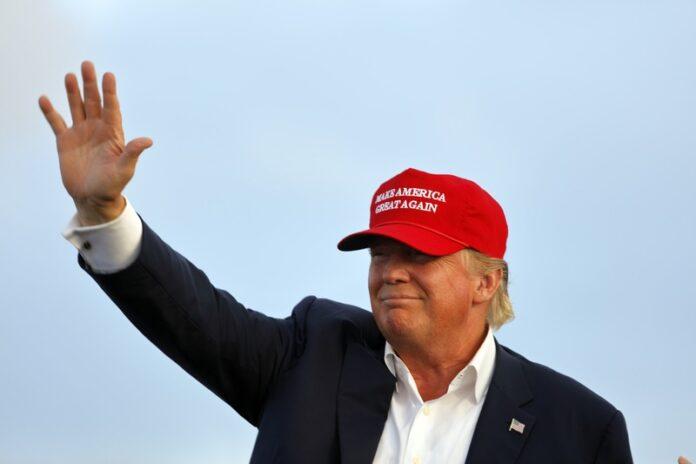
President Donald Trump said Thursday, September 17, 2026, that he is nearing a decision on whether to restart large-scale military action against Iran. In an interview with Axios, he said an even more aggressive phase of the war has not been ruled out. “I have a big decision coming up. Do I want to go in and annihilate them [the Iranian regime] or do I not? It’s a big decision. Anything could happen with me,” he said.
In his address to the United Nations General Assembly on September 22, Trump threatened to “annihilate” Iran. Meeting regional leaders the same day, he went further: “There’s going to be a time when it’s too late, and we won’t have a chance of letting them survive as a nation.”
Whether that decision comes before or after the U.S. midterm elections in November, he would not say. Operation Epic Fury, the American military campaign against Iran, is in its seventh month, having begun on February 28.
Talks on the Sidelines in New York
Trump held his meeting on the sidelines of the United Nations General Assembly in New York City on Tuesday, September 22. Around the table were the Saudi foreign minister, Qatar’s emir, Jordan’s king, the Turkish and Syrian presidents, Egyptian officials, the UAE foreign minister and the U.S. secretaries of state and the Treasury. “I think there’s a lot of momentum for them to make a deal. That’s what we’re hearing from everybody,” Trump said. Six Gulf states were on the guest list: Oman, Kuwait, Bahrain, Qatar, the United Arab Emirates and Saudi Arabia, and the talks were expected to steer the war’s next phase — either a return to broad military action or a fresh attempt at diplomacy.
Also on September 22, American and Iranian officials held their first known indirect talks since a ceasefire collapsed in July. Iranian Foreign Minister Abbas Araghchi and U.S. envoys Steve Witkoff and Jared Kushner communicated through mediators on the assembly’s sidelines. The shuttle talks “appeared to have yielded no concessions in the public stance of either side.”
Gulf governments have a great deal riding on the answer. Trump shelved a return to major combat operations in early August after Saudi Arabia and Qatar warned that Tehran could hit Gulf oil and gas facilities in retaliation. Saudi Arabia is also fending off a growing campaign of missile and drone strikes launched by Yemen’s Iran-backed Houthis.
A Different Tone a Day Earlier
Trump had sounded markedly different on Wednesday, September 16. “Hopefully we’re toward the end of the war. They want to make a deal. We’ll see how that works out,” he told reporters. Asked whether contact with Tehran was running through intermediaries, he said the two governments deal directly.
Later that day he appeared at a rally at Gastonia Municipal Airport in Gastonia, North Carolina, alongside North Carolina Republican Senate candidate Michael Whatley, telling the crowd that Iran cannot keep going and that the fighting would end soon. “You watch what’s gonna happen to Iran. It’s gonna be a really good conclusion,” he said.
On Wednesday, September 9, the president had predicted the fighting would end “immediately after” the midterm elections because Iran “can’t hold out any longer.” He also indicated that any eventual agreement would reach well past the nuclear limits that dominated earlier talks. “I’m doing much more than a nuclear deal. There’s a lot more than nuclear,” he said.
Blockade, Sanctions and Troop Levels
Short of ordering a new offensive, Washington has held its naval blockade of Iranian ports in place and widened economic sanctions on Tehran. “Not one ship has gone to Iran since we started. They tried, and we blew them up,” Trump said.
At the September 22 meeting, Trump credited Treasury Secretary Scott Bessent with leading “Operation Economic Outcast.” Said the president: “We’re completely isolating Iran financially.”
The military has also worked to reopen shipping lanes through the Strait of Hormuz, and between early May and September 16 more than 900 million barrels of crude moved through the waterway with U.S. military assistance. “The strait is open. Those lanes are open. And that is why commercial vessels continue to flow through them,” CENTCOM spokesman Capt. Tim Hawkins said.
Trump and War Secretary Pete Hegseth have directed U.S. forces in the Middle East to stay at their current strength through the end of the year, leaving them able to resume full-scale combat if the order comes.
Negotiations with Iran, meanwhile, have been handed to Trump’s son-in-law Jared Kushner and Steve Witkoff. Tehran has signaled it would rather deal with Vice President JD Vance.
Mohsen Rezaei, secretary of Iran’s Supreme National Security Council, said on Saturday, September 19, that Tehran had passed its terms to Washington through Qatar: an end to the war on all fronts, the release of frozen Iranian funds and an end to the naval blockade. “Trump’s threats will not achieve any results. We are prepared for a decisive war,” he said.
Iranian President Masoud Pezeshkian told the United Nations General Assembly on September 23 that Tehran would never surrender to the U.S. but still believed in diplomacy, saying Iran is “ready for dialogue and diplomacy and negotiations without accepting the language of force.” A member of the U.S. delegation walked out minutes into his speech.
Gas and oil prices have climbed during the war, and Trump has brushed off the concerns ahead of the November midterms. “It’s a very inexpensive price to pay for what we’ve done. Remember that. It’s a little more,” he told the Gastonia crowd on September 16, adding that prices were going to “come tumbling down.”
Araghchi took his case to EU counterparts as well, writing on X on September 23: “In meetings with @kajakallas and other EU counterparts, I warned of the severe long-term consequences of facilitating and supporting Israeli-U.S. war crimes, whether in Gaza or Iran.” NATO Secretary General Mark Rutte had said 5,000 planes have taken off from European bases in support of Epic Fury since February 28.
Planning for What Comes Next
Inside the White House, an early-stage post-war strategy is taking shape around a regional effort to contain Iran and a broader push to normalize relations between Israel and its neighbors. Planners are working around two elections: Israel’s on October 27 and the U.S. midterms in November.
Other pieces moved into place before the General Assembly. The State Department cleared a potential foreign military sale to Saudi Arabia of 48 F-35 Lightning II aircraft and related equipment, a package valued at $24.3 billion. Pezeshkian was also granted a visa for the New York session, as were Araghchi and other high-ranking officials from Tehran.