


Ten police officers have been killed in a wave of coordinated gangster attacks in Guatemala that began with prison riots in three facilities, prompting President Bernardo Arévalo to declare a 30-day nationwide state of emergency to combat the violence.
The violence erupted Saturday when inmates seized control of three prisons in coordinated riots, taking 43 guards hostage. The gangs were demanding privileges for their members and leaders. Security forces moved to retake the facilities on Sunday, leading to a series of retaliatory attacks on police officers.
Officers entered the Renovacion I maximum-security prison in Escuintla, roughly 75 kilometers south of Guatemala City, deploying armored vehicles and firing tear gas. Gang members were also holding hostages in two additional facilities: 28 at the Fraijanes II prison east of the capital, and nine more at the Preventivo prison on the city’s outskirts.
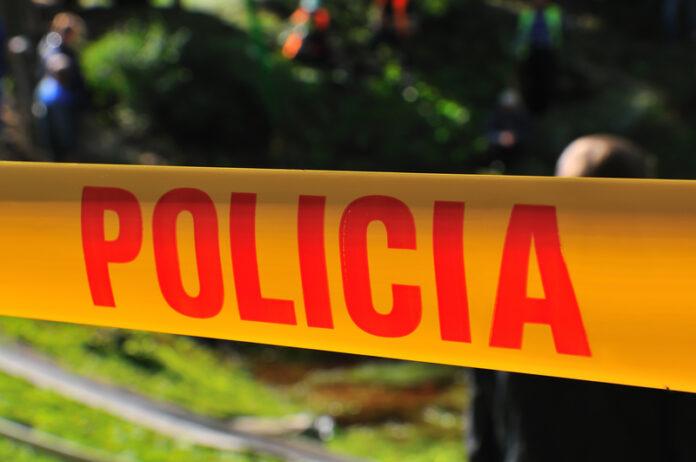
Evidence markers were placed at scenes in Villanueva, on the outskirts of Guatemala City, where officers were killed following the prison operations. Eight police officers were initially reported killed, with 10 other officers wounded in the retaliatory attacks. Officials confirmed late Monday that a 10th police officer died following the attacks.
President Arévalo decreed the 30-day nationwide state of emergency Sunday evening. The measure suspends the right of assembly and permits individuals to be arrested and interrogated without a court order. The country’s lawmakers approved the emergency declaration Monday in a near-unanimous vote.
Deployed soldiers were seen around Congress in Guatemala City Monday after the emergency declaration. Schools were suspended nationwide Monday as a safety precaution.
The Interior Ministry hosted a wake for the fallen police officers Monday, where President Arévalo was photographed comforting relatives of the slain officers in a display of solidarity with the grieving families.
The U.S. Embassy issued a security alert on Sunday, instructing its staff to remain indoors and stay away from large gatherings. In October, Congress updated legislation to classify members of the Barrio 18 and Mara Salvatrucha gangs as terrorists. The revisions also increased prison terms for gang members involved in criminal activity.
National Civil Police Director David Custodio Boteo said there were at least 10 armed attacks against police. Interior Minister Marco Antonio Villeda said the killings were carried out “by these terrorists, in response to the actions the Guatemalan state is taking against them.”
The interior ministry published a video showing officers handcuffing the alleged leader in Guatemala of the Barrio 18 gang, identified as Aldo Dupie, alias “El Lobo”. Barrio 18 and its rival gang Mara Salvatrucha are blamed for much of the drug trafficking and criminal violence that plague the Central American country. Washington has declared both groups terrorist organizations.
Since mid-2025, gang members have staged uprisings at prisons to demand their leaders be held in less restrictive conditions. In October, 20 leaders of the Barrio 18 gang escaped from prison. Only six have been recaptured, while another was shot and killed.
Guatemala’s homicide rate in 2025 was 16.1 per 100,000 inhabitants, more than double the global average. Defense Minister Henry Saenz said the army “will remain on the streets” to continue “dismantling” criminal groups.
The 10 deaths represent a significant loss for the National Civil Police and have intensified discussions about officer safety and the resources available to law enforcement. The state of emergency gives the government broader powers to respond to the crisis without usual procedural constraints.