


Gunfire erupted near the presidential palace in Caracas, Venezuela, on Monday night, hours after President Donald Trump declared he was personally in charge of running the South American nation following the capture of President Nicolás Maduro.
Videos showed what appeared to be drones and anti-aircraft fire in the night sky near Miraflores Palace. Venezuela’s Ministry of Communication said police officers fired at unauthorized drones flying over the area. The ministry stated that no confrontation occurred and the entire country remained completely calm.
The White House told reporters it was not involved in the Monday night incident near the palace. Discussions between security forces suggested confusion among different units, with one member describing a misunderstanding after shots were fired.
The gunfire came amid extraordinary tensions in Venezuela following a massive U.S. military operation that captured Maduro and his wife, Cilia Flores, on Saturday morning. The operation, called Operation Absolute Resolve, involved more than 150 aircraft from 20 airbases. U.S. service members were injured during the mission, though Trump said the soldiers are in good shape.
“They’re all in good shape,” Trump told reporters, describing it as a very dangerous operation.
Maduro and Flores were dragged from their bedroom during the early morning raid and transported to New York to face federal charges. The former Venezuelan leader appeared in federal court on Monday, where he pleaded not guilty to the charges against him. He is being held at the Metropolitan Detention Center in Brooklyn.
In the aftermath of Maduro’s capture, Delcy Rodriguez was sworn in as acting president on Monday. Rodriguez, who previously served as Maduro’s vice president, said she will cooperate with Washington. The swearing-in occurred amid a rapidly evolving political situation.
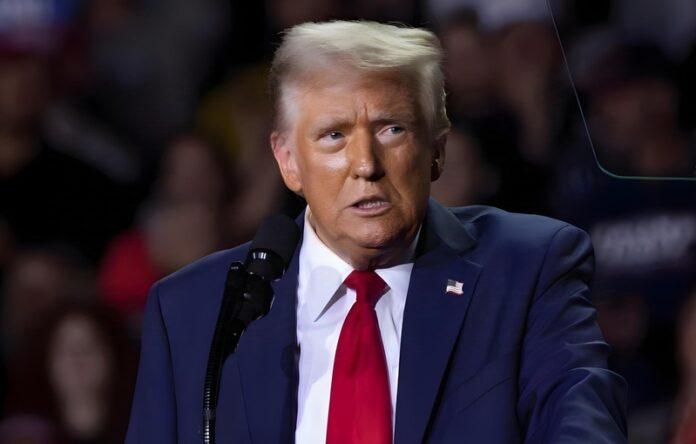
Trump made clear his vision for Venezuela’s immediate future when asked who would be the top person in charge of the country. “Me,” he responded simply.
The president elaborated that the United States will run Venezuela until a safe, proper transition can be arranged, though he provided few details about what that transition would entail or when it might occur. Trump said Secretary of State Marco Rubio, Defense Secretary Pete Hegseth, Vice President JD Vance, and deputy White House chief of staff Stephen Miller would provide expertise in guiding U.S. involvement.
A central component of Trump’s plan involves American control of Venezuela’s oil sector. Speaking from Mar-a-Lago, Trump announced that U.S. oil companies will fix the badly broken infrastructure and start making money for the country.
“We’re going to have our very large United States oil companies, the biggest anywhere in the world, to go in, spend billions of dollars to fix the badly broken infrastructure, the oil infrastructure, and start making money for the country,” Trump said.
Venezuela possesses approximately 303 billion barrels in oil reserves, making it one of the most resource-rich nations in the world. However, decades of underinvestment and mismanagement have left the country’s petroleum infrastructure in severe disrepair. Production has fallen dramatically from peak levels, and the state-owned oil company has struggled to maintain operations.
Trump revealed he alerted oil companies about the impending operation before it commenced, though he did not notify members of Congress. The admission raised questions about the administration’s decision-making process and consultation with elected representatives before launching a major military action.
The president framed the intervention as necessary to protect American interests and restore Venezuela’s economy. He argued that the country’s oil wealth should benefit both Venezuelans and Americans, though critics have questioned the legal and diplomatic basis for such extensive U.S. involvement in another nation’s internal affairs.
Major American energy companies have been watching developments closely. The opportunity to access Venezuela’s massive reserves represents a potentially lucrative business proposition, but companies must weigh the risks of operating in an unstable political environment against potential rewards. The infrastructure challenges alone would require years of sustained investment to overcome.
Venezuela’s oil requires specialized refining equipment and technical expertise. This makes extraction and processing more complex and expensive than conventional oil production. Foreign investment has been limited in recent years.
International reaction to the U.S. operation has been mixed. Some neighboring countries have expressed concern about the precedent of military intervention to remove a sitting head of state, while others have welcomed the change given Venezuela’s political and economic crisis. The situation represents a significant test of international law and norms regarding sovereignty and intervention.
Rodriguez faces the challenge of governing under U.S. oversight while maintaining legitimacy with Venezuelan institutions and the population. Her statement about cooperating with Washington suggests she recognizes the limited options available, though the long-term political arrangements remain unclear.
The Monday night gunfire near the presidential palace highlighted the fragile security situation in Caracas. Multiple armed groups operate in the capital, and coordination between these groups appeared to break down during the incident, raising concerns about control and command structures.
As Venezuela enters this unprecedented period of external administration, questions remain about how long U.S. involvement will last, what form a transition government might take, and whether the country’s population will accept the arrangement. The situation continues to evolve rapidly, with both political and security dynamics remaining fluid.
Trump’s assertion of direct control over another nation represents a dramatic expansion of presidential power and a departure from traditional American foreign policy approaches. The coming weeks will determine whether this intervention achieves its stated objectives or creates new complications in an already complex regional situation.
Sources:
https://www.thedailybeast.com/gunfire-erupts-as-trump-says-hes-in-charge-of-venezuela/
https://www.newsghana.com.gh/gunfire-erupts-near-venezuela-palace-after-maduro-capture/
https://english.bombaysamachar.com/international/nicolas-maduro-trump-2/?amp=1
https://www.wsmv.com/2026/01/05/trump-says-soldiers-injured-during-operation-venezuela-are-good-shape/
https://www.wionews.com/world/venezuela-swears-in-delcy-rodriguez-as-acting-president-days-after-maduro-abduction-1767674124349/amp
https://www.bbc.com/news/articles/cg51625lmmgo
https://www.newsghana.com.gh/trump-announces-american-control-of-venezuelan-oil-sector/