


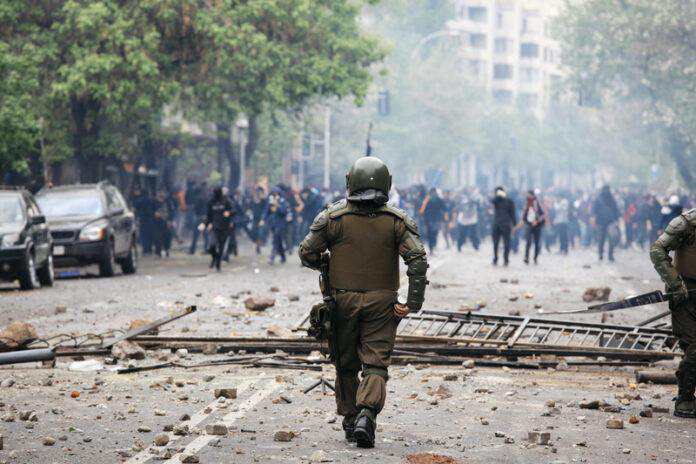
Several people were killed during widespread protests across Iran that intensified Thursday, January 1, marking the most significant escalation since demonstrations over economic conditions began. The clashes between protesters and security forces resulted in multiple fatalities in western and central regions of the country.
The semi-official Fars news agency reported that three people were killed and 17 injured in Azna, a city in Lorestan Province. The deaths occurred during clashes with security forces, according to the report. Meanwhile, both Fars and the rights group Hengaw reported that two people were killed in Lordegan, located in Chaharmahal and Bakhtiari province.
The Revolutionary Guards said one member of its Basij paramilitary unit was killed in Kuhdasht, with 13 others wounded. The Basij volunteer force, which is affiliated with the Revolutionary Guards, has been deployed to suppress the unrest. Iranian authorities identified the deceased member as Amirhossam Khodayari Fard, 21 years old.
Additional fatalities were reported in central Iran. The mounting death toll represents the first confirmed casualties since protests over economic conditions began, when shopkeepers in Tehran launched demonstrations against soaring inflation and the collapsing national currency.
Rights group Hengaw identified two of the deceased in Lordegan as Ahmad Jalil and Sajjad Valamanesh. The organization has documented what it describes as security forces opening fire on protesters in multiple locations. However, casualty figures vary between state media and rights groups, making precise tallies difficult to confirm.
The demonstrations have spread beyond Tehran to Iran’s rural provinces, including areas primarily inhabited by ethnic minorities. Protests were also reported in Marvdasht in Fars Province. Iranian news agencies reported that 30 people were arrested in Tehran for what authorities described as disturbing public order.
President Masoud Pezeshkian has attempted to address the growing unrest by acknowledging what he called the “legitimate demands” of protesters. Government spokesperson Fatemeh Mohajerani announced Thursday that authorities would hold direct dialogue with representatives of trade unions and merchants, though she provided no specific details about the format or timing of such discussions.
“From an Islamic perspective, if we do not resolve the issue of people’s livelihoods, we will end up in hell,” Pezeshkian said at an event broadcast on state television Thursday.
However, Iran’s prosecutor general, Mohammad Movahedi-Azad, issued a stern warning alongside these conciliatory gestures. He stated that any attempt to create instability would be met with what he described as a decisive response, signaling that authorities remain prepared to use force against demonstrators.
The Revolutionary Guards on Thursday accused demonstrators in Kuhdasht of “taking advantage of the atmosphere of popular protests,” suggesting that authorities view some participants as exploiting legitimate economic grievances for other purposes.
Deputy Governor Saeed Pourali of Lorestan Province confirmed that 13 police officers and Basij members were injured during stone throwing in Kuhdasht. The province has emerged as a focal point of the unrest, with multiple cities experiencing violent confrontations.
The protests initially began when shopkeepers and traders in Tehran closed their businesses in response to rapidly deteriorating economic conditions. By Tuesday, university students had joined the demonstrations, expanding the movement’s base and geographic scope.
Iran’s economy has been severely impacted by international sanctions, with inflation rates hovering around 40 percent according to some estimates. The Iranian rial has experienced significant devaluation, creating widespread hardship for ordinary citizens who struggle to afford basic necessities.
The economic crisis has been compounded by years of Western sanctions imposed over Iran’s nuclear program. These sanctions have restricted Iran’s ability to sell oil on international markets and have limited access to global financial systems, creating cascading effects throughout the economy.
Some protesters have expanded their demands to include calls for broader political change, with chants directed against Supreme Leader Ali Khamenei reported in some locations.
As the protests continued, the situation remained fluid with reports continuing to emerge from multiple cities. The combination of economic desperation, youth mobilization, and violent confrontations presents a significant challenge to Iranian authorities, who must balance their desire for stability with the need to address underlying grievances that have fueled the unrest.