


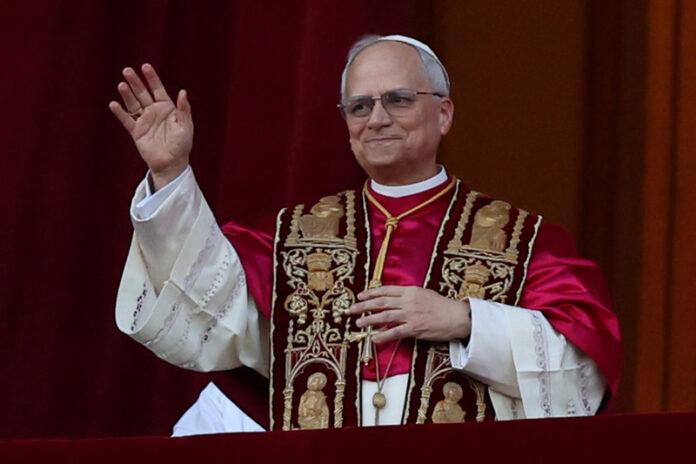
In a stunning diplomatic rebuke, Pope Leo XIV will not visit the United States in 2026, the Vatican confirmed Sunday, marking an unprecedented snub of his homeland during his first full year as the first American pontiff.
“The pope will not be going to the United States in 2026,” Vatican spokesman Matteo Bruni told journalists on February 8, dashing widespread speculation that Pope Leo would visit around the United Nations General Assembly in September. The announcement comes amid escalating tensions between the Vatican and President Donald Trump’s administration over immigration policy and military interventionism.
Instead, Pope Leo XIV plans to visit countries across Latin America, Africa, and Europe before year’s end, with trips expected to Angola, Equatorial Guinea, Spain, Argentina, Uruguay, and Peru—where he previously served as bishop. The decision to bypass America during the country’s 250th anniversary of independence on July 4, 2026, sends a clear message about the state of U.S.-Vatican relations.
The pope has publicly criticized the Trump administration multiple times since assuming the papacy last year. In November, he called the administration’s treatment of immigrants “extremely disrespectful.” Following Trump’s military action against Venezuela in January, Pope Leo condemned what he termed “diplomacy based on force” and a renewed “zeal for war.”
The White House fired back at the pontiff’s criticism. After Pope Leo condemned the Department of Homeland Security’s immigration raids in November, an unnamed White House spokesperson said the pope “doesn’t know what he’s talking about,” according to multiple reports. Assistant Homeland Security Secretary Tricia McLaughlin went further, implying in a post on X that the pontiff was a liar.
Vice President JD Vance, who converted to Catholicism in 2019, finds himself caught between his faith and his political allegiance. Pope Leo gave Vance a brief greeting when the vice president attended his inaugural Mass in May 2025. The awkward relationship between America’s highest-ranking Catholic politician and the first American pope has become a source of controversy within the Catholic community.
Vance previously wrote that his conversion “demanded that I let go of grudges, and forgive even those who wronged me,” yet he has remained loyal to Trump’s hardline policies. Following the killings of American citizens Renee Good and Alex Pretti by federal agents, journalist John Grosso wrote a scathing op-ed in the National Catholic Reporter. “As a Catholic, Vance could have chosen to share the Gospel message of healing and human dignity. Instead, he chose to offer the MAGA message of division and blame,” Grosso wrote.
Several factors may have contributed to the Vatican’s decision. National Catholic Reporter Vatican Correspondent Justin McLellan noted that the Vatican traditionally avoids scheduling papal trips during election years, and the upcoming midterm elections already face significant tension. Republicans worry about losing control of both chambers as Trump’s policies grow increasingly unpopular.
Cardinal Christophe Pierre, the papal nuncio to the United States, recently celebrated his 80th birthday on January 30, meaning he can no longer vote in a papal conclave. The Vatican expects to name his successor soon, making it difficult for a new nuncio to organize such a high-stakes visit during a leadership transition.
The pope’s relationship with his American identity remains complex. Pope Leo once said “I very much feel that I’m an American,” but during his first public appearance after his election, he notably spoke in Italian and Spanish while avoiding his native English. The symbolic choice suggested a pontiff eager to emphasize his global role over his national origins.
Historical precedent makes Pope Leo’s absence from America even more striking. Both Pope John Paul II and Pope Benedict XVI visited their home countries during their first year as pontiff. John Paul II drew massive crowds in Poland in June 1979—just eight months after his October 1978 election—while Benedict XVI traveled to Germany for World Youth Day in August 2005, four months after his election. Even Pope Francis, who never visited his native Argentina, had diplomatic reasons tied to his complicated relationship with Argentine politics.
Pope Leo has kept a relatively light travel schedule since inheriting a packed calendar for Holy Year 2025. He made only one international trip so far, visiting Turkey and Lebanon from November 27 to December 2, 2025, a journey planned before his predecessor’s death.
The Vatican snub arrives at a precarious political moment. The Trump administration continues to face backlash over its immigration enforcement and foreign policy decisions. One GOP strategist told reporters that Republican prospects for the Senate have deteriorated significantly. “A year ago, I would have told you we were almost guaranteed to win the Senate. Today, I would have to tell you it’s far less certain,” the strategist said.
For American Catholics who hoped to see their native son return home in triumph, the wait continues. Whether Pope Leo will ever make a papal visit to the United States during the Trump presidency remains uncertain, but for now, the first American pope has made his position clear: he will minister to the world, just not to the country that produced him.