


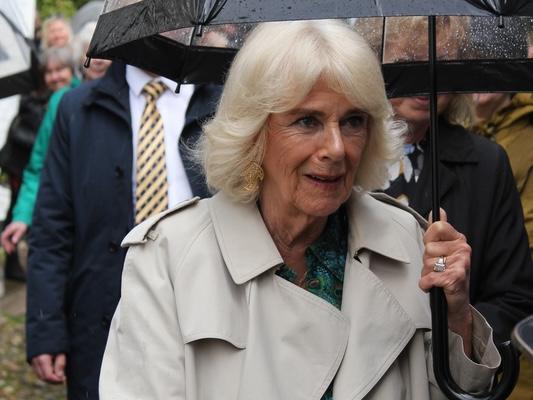
Queen Camilla has opened up about the hidden emotional weight she carried during a January 31, 2024, visit to a London cancer support center — a visit that took place just five days after surgeons delivered the devastating news that King Charles had been diagnosed with cancer during what had been a routine medical procedure.
The queen’s candid account emerges in a seven-minute film recorded at Clarence House, in which she sits down with Dame Laura Lee, chief executive of the cancer support charity Maggie’s. Speaking with unusual frankness, the queen describes how she walked through the Maggie’s Royal Free centre in London that January day surrounded by patients and their families — all navigating their own cancer journeys — while privately grappling with news she was sworn not to share.
A Secret She Had to Keep
Buckingham Palace publicly announced King Charles’ diagnosis five days after the queen’s visit to the center. During those intervening days, Camilla carried the knowledge alone in public settings, speaking warmly with patients and caregivers while holding back what she herself was experiencing. She recalled being on the verge of disclosing the news more than once.
Camilla said, “I was just longing to let it out, but obviously I couldn’t.” She described looking around at those present — patients, relatives, all absorbing life-altering news — and feeling that the experience deepened her already strong conviction about the importance of such spaces. She acknowledged she came close to saying something but held back, recognizing that the moment did not belong to her.
The queen also reflected on the strange duality of that day’s conversations. She had long visited Maggie’s centers across the country in her capacity as a royal patron, listening to people describe what it means to receive a cancer diagnosis. But January 31, 2024, was different. She described feeling as though her conversations with patients carried a far more personal undercurrent than anyone in the room could have realized, though she was careful not to pry into their experiences beyond what felt appropriate.
Cancer ‘Comes Home to Roost’
The queen reflected on the jarring shift that a diagnosis within her own household had forced upon her perspective. For years, she had engaged with cancer patients as a supporter and advocate — someone who listened but stood at a certain remove from the disease’s immediate reach. The king’s diagnosis collapsed that distance overnight.
She described the sudden realization that she was no longer simply a visitor to someone else’s crisis. She was now also a person with a partner facing cancer, navigating treatment decisions and the emotional demands that come with them. She spoke with evident pride about the king’s determination throughout the process, saying he refused to let the illness define his pace or his purpose.
Surgeons discovered King Charles’ cancer during routine surgery at The London Hospital, where he had been treated for a benign enlarged prostate. Buckingham Palace subsequently confirmed the cancer was neither prostate cancer nor connected to that surgery. The king then began what officials described as a long and at times deeply grueling course of treatment, portions of which are ongoing. Palace officials have said his condition is continuously monitored and reviewed to protect and prioritize his continued recovery.
The King’s Approach Inspires Others
The film, which marks a December 2024 engagement tied to Maggie’s 30th anniversary, also touches on the measurable public impact of the king’s decision to speak openly about his illness. Since King Charles went public with his diagnosis, the charity has recorded a 12% increase in men seeking support at its centers — a figure the queen cited as evidence of what openness about cancer can accomplish.
The queen has long been an advocate for dismantling the silence that often surrounds serious illness, and she pressed that point again in the film. She called on every hospital in the country to have access to a Maggie’s center, describing the charity’s spaces as places where it is acceptable not to perform wellness — where people can speak honestly about fear, uncertainty, and grief without being expected to appear fine.
She also addressed the psychological relief that comes from speaking openly about illness, describing the act of honest conversation as essential to coping. Her comments reflected both the personal journey she and the king have shared since the diagnosis and her broader belief that emotional support during illness is not supplementary care — it is fundamental to recovery.
A Royal Voice for Cancer Support
The film featuring the queen’s conversation with Dame Laura Lee at Clarence House adds a new dimension to the royal family’s public engagement with cancer awareness. The king himself has previously described the public response to his diagnosis as a source of profound comfort, calling it a “great personal blessing” that so many people had shared their own experiences and goodwill.
Palace officials have said the king is doing exceptionally well and that his ongoing monitoring represents what they have characterized as a precautionary phase of his care. The queen’s willingness to revisit her own experience from that January 2024 visit — describing the weight of what she knew and could not say — offers one of the most personal accounts yet of the private toll the diagnosis took on those closest to the king, even as the public remained unaware.