


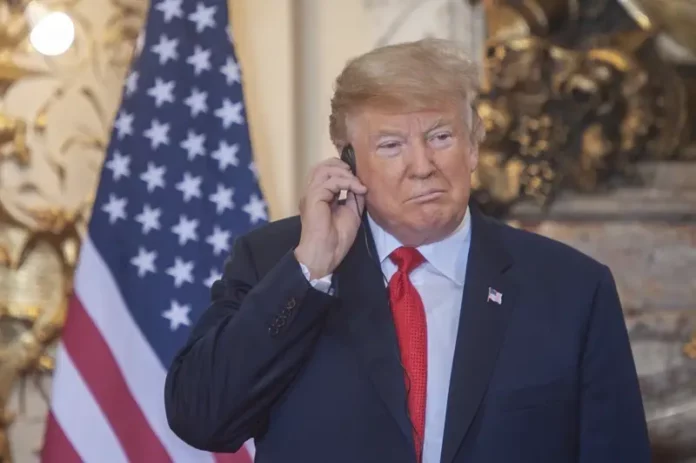
President Donald Trump erupted at Defense Secretary Pete Hegseth during a Cabinet meeting at Camp David on Aug. 1, 2026, demanding to know why he had been kept in the dark about severe munitions shortages that have constrained US military options in the ongoing war with Iran, according to two sources familiar with the matter.
Trump, 80, told Hegseth he had believed the munitions problem “had been fixed,” according to those sources — an assertion the White House and Pentagon moved quickly to deny. Hegseth, 46, who has adopted the unofficial title of “secretary of war” since taking the Pentagon post, reportedly blamed his deputy, Stephen Feinberg, 66, for the failure to keep the president informed about the weapons shortfalls. Feinberg had served as head of Trump’s Intelligence Advisory Board during the president’s first term.
Feinberg Called, Crisis Meeting Held
The confrontation with Hegseth was not the only call Trump made that day. Friday evening, the president phoned Feinberg directly, expressing fury over the shortages and pressing him on how the Pentagon intended to solve the problem. Trump also reportedly threatened to fire Feinberg during that conversation. Feinberg subsequently convened an emergency meeting with senior Pentagon officials later that same night.
The shortages in question center on long-distance guided missiles and interceptors. A report from the Center for Strategic and International Studies (CSIS), published July 27, offered a stark picture of how quickly American stockpiles have been drawn down since the war began in late February. The US military entered the conflict with 2,330 Patriot systems and 452 Terminal High Altitude Area Defense (THAAD) systems. According to the July 27 estimates, between 759 and 827 Patriot systems and between 234 and 278 THAAD systems remained — representing a dramatic reduction in a matter of months. A separate report found the Pentagon had consumed approximately 80 percent of its defensive interceptor missiles throughout the conflict.
Long-range weapons including Army Tactical Missile Systems and Precision Strike Missiles, each costing around $1 million, are among the categories most acutely affected, raising alarm among some defense experts about US readiness to respond to potential conflicts elsewhere in the world.
The Human and Financial Toll of the Iran War
The war, now stretching into its sixth month, has killed 18 American service members and left hundreds more wounded. Hegseth told the Senate Appropriations Committee at a July 21 hearing that U.S. military operations in Iran had cost approximately $37.5 billion, and he also requested an additional $67 billion from Congress — in part to replenish depleted weapons stockpiles. He attributed the depletion to what he called the Biden administration’s failure to adequately fund the Defense Department.
Public support for the conflict has eroded significantly. A Marquette Law School poll found that 75 percent of Americans now consider the war “not worth the cost.” The pressure on the administration intensified Sunday, when Trump posted on Truth Social that he had called off what he described as the largest American military strike since World War II. He said he had agreed to cancel the attack at the request of Iran and other Middle Eastern countries after the parameters of a potential deal had been agreed to. Iranian officials said Monday that no such talks between the two countries had been planned.
White House and Pentagon Push Back Hard
The administration mounted an aggressive denial campaign in response to the reporting. White House Press Secretary Karoline Leavitt called the story “100% fake news” that “literally never happened,” insisting Trump had “the utmost confidence in Secretary Hegseth.” Chief Pentagon Spokesman Sean Parnell went further, accusing anonymous sources of misleading reporters and declaring that every element of the story — including claims about depleted stockpiles, internal disagreements, Hegseth blaming Feinberg, and a rumored resignation — was “equally fictional.”
Hegseth himself had already been on the offensive before the Camp David story broke. On Tuesday, the former “Fox & Friends” Weekend host lashed out on social media over a CNN broadcast banner about interceptor depletion in the Iran war, calling the claim false and accusing the network of spreading disinformation.
Trump Publicly Rallies Behind Hegseth
Despite the reported friction, Trump took to Truth Social on Thursday to publicly vouch for his defense secretary, calling the media coverage false and unfounded and praising Hegseth for eliminating diversity programs at the Pentagon and driving military recruitment to what Trump described as historic levels. Trump also pointed to the US military’s capture of former Venezuelan leader Nicolás Maduro in January as evidence that his national security team was performing well. According to Trump’s post, the military possessed “massive amounts” of munitions and that large quantities were actively being produced and shipped.
Trump went on to threaten those believed to be leaking information to journalists, writing on Truth Social that those feeding damaging stories to reporters were being “hunted down” and that lengthy prison sentences would be sought. He characterized such leaking as treasonous, a description that drew immediate attention from civil liberties observers. Whether the reported rift between Trump and his defense secretary has been genuinely resolved — or merely papered over in public — remains unclear, as the administration’s war in Iran continues to test American military resources and political patience alike.