


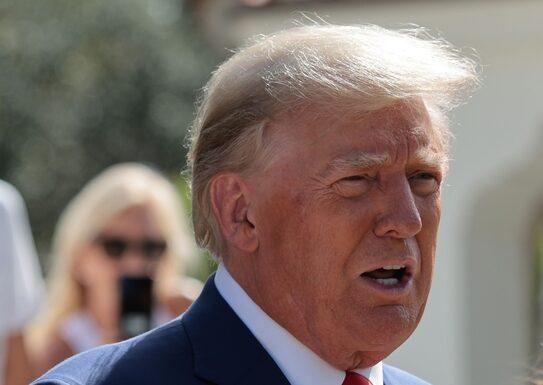
President Donald Trump on Monday formally pardoned former Honduran President Juan Orlando Hernandez, erasing a major drug trafficking conviction that had sent the Central American leader to federal prison for 45 years. The move sparked immediate controversy across both sides of the political aisle, with lawmakers questioning how the decision aligns with the administration’s aggressive stance against drug cartels.
Hernandez was released from U.S. Penitentiary Hazelton in West Virginia on December 2, according to his attorney Renato Stabile and the Federal Bureau of Prisons. The 57-year-old politician, who served as Honduras’ president from 2014 to 2022, had been convicted in March 2024 of helping drug traffickers move an estimated 400 tons of cocaine through Honduras into the United States.
“After almost four years of pain, of waiting and difficult challenges, my husband Juan Orlando Hernandez RETURNED to being a free man, thanks to the presidential pardon granted by President Donald Trump,” his wife Ana Garcia de Hernandez announced via social media Tuesday. She included documentation from the Bureau of Prisons confirming his release.
Stabile expressed gratitude for the pardon, stating that Hernandez was “glad this ordeal is over and is looking forward to regaining his life after almost 4 years in prison.” The attorney described the prosecution as an injustice that Trump had now corrected.
The pardon represents a stunning reversal for a case that federal prosecutors had called one of the largest and most violent drug-trafficking conspiracies in the world. During Hernandez’s trial in New York, prosecutors presented evidence that he accepted bribes from drug cartels and used his presidential authority to protect trafficking operations. He was also ordered to pay an $8 million fine alongside his prison sentence.
Federal Judge P. Kevin Castel, who presided over the sentencing, noted that Hernandez employed considerable acting skills during his presidency. The judge said Hernandez portrayed himself as an anti-drug crusader while actually deploying Honduras’ police and military to protect the drug trade when necessary. Castel emphasized the sentence should serve as a warning to well-educated individuals who believe their status protects them from justice.
Trump defended his decision to reporters aboard Air Force One on Sunday, saying he was asked by many people in Honduras to grant the pardon. “The people of Honduras really thought he was set up, and it was a terrible thing,” Trump said. He characterized the prosecution as a Biden administration setup, adding that he reviewed the facts and agreed with that assessment.
The pardon drew sharp criticism from members of Congress. Republican Senator Bill Cassidy of Louisiana questioned the logic behind pardoning Hernandez while the administration pursues Venezuelan leaders for drug trafficking. Democratic Senator Tim Kaine of Virginia called the decision shocking, suggesting it indicated Trump cares little about narco-trafficking.
White House Press Secretary Karoline Leavitt defended the pardon, criticizing what she described as overreach by the previous administration. She maintained that Trump’s decision did not contradict his administration’s broader efforts to combat drug trafficking at U.S. borders.
Hernandez was arrested in February 2022, just weeks after leaving office and transferring power to current President Xiomara Castro. Castro had authorized his arrest and extradition to the United States, which took place in April 2022. Throughout his legal proceedings, Hernandez maintained his innocence, claiming he was the victim of revenge by drug traffickers he had helped extradite to the United States.
The case gained additional attention due to connections to Trump’s inner circle. Emil Bove, who prosecuted the case against Hernandez, later became one of Trump’s defense attorneys before being appointed as a federal judge. Roger Stone, a longtime Trump ally, reportedly lobbied for the pardon.
Trump initially announced his intention to grant the pardon on November 28, just days before Honduras’ presidential election. The timing injected a new element into the country’s political landscape and generated speculation about its impact on the electoral contest.
Prosecutors had argued during the trial that Hernandez took bribes from drug cartels to fuel his political rise and used his presidential authority to protect trafficking operations. They presented evidence that he helped cartels move hundreds of tons of cocaine worth billions of dollars. The prosecution portrayed him as a politician who corrupted Honduran government institutions while publicly presenting himself as tough on crime.
The pardon leaves questions about whether Hernandez will face any legal consequences in Honduras, where various corruption investigations of his administration never resulted in charges against him personally. Attorney General Johel Zelaya indicated his office remained obligated to seek justice, though he did not specify what charges might be pursued.
The decision highlights tensions within U.S. drug policy as the administration simultaneously pursues aggressive military action against alleged drug trafficking operations in the Caribbean while granting clemency to a convicted drug trafficker. Critics argue the pardon sends mixed signals about the administration’s commitment to combating narcotics trafficking from Central America.
Presidential pardons are an executive power that allows sitting presidents to grant clemency for federal crimes. The Constitution gives presidents broad authority to issue pardons without requiring approval from Congress or the courts, though such decisions often generate political debate when they involve high-profile criminal convictions.