


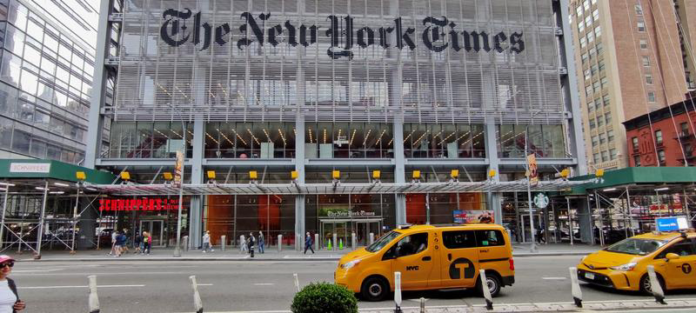
New York Times reporter Maggie Haberman used a Tuesday evening appearance on MS NOW to deliver a blistering assessment of President Donald Trump’s approach to unfavorable press coverage, framing his $15 billion defamation lawsuit against her newspaper as part of a broader pattern of “bullying campaigns” designed to silence critics.
Haberman appeared on “The Weeknight” primarily to discuss her latest reporting on the swelling costs of Trump’s Qatar plane, an aircraft currently undergoing upgrades that run into the hundreds of millions of dollars. But the conversation took a sharper turn when Michael Steele steered it toward the legal fight looming over the Times.
A Lawsuit Given Another Chance
The most recent development in the case came when a judge handed Trump and his legal team until August 27 to amend their complaint — the second such opportunity they have received. Trump publicly celebrated the ruling as a win, but the Times pushed back hard, disputing any suggestion that the decision validated his claims.
In a statement responding to the ruling, the newspaper said the judge “simply gives him yet another chance to draft a complaint that demonstrates any legal merit,” adding that the decision offered no support for what it called the frivolous accusations in Trump’s earlier filing.
Haberman is not named as a defendant in the suit. Even so, Trump has personally singled her out, accusing her of “bad reporting” and warning that she would “pay the price when the lawsuit gets to court.” That backdrop framed Steele’s pointed question about how the reporter and her colleagues manage to keep working under such pressure.
The Pressure From Both Sides
Steele pressed her on the strange dual dynamic of the current moment — a president who threatens legal consequences while his administration simultaneously courts reporters, angling to kill stories or shape their framing. He asked how she and her colleagues “suffer through this BS from this administration” when the White House is at once trying to get her attention and pushing a preferred slant on coverage.
Haberman’s answer began with a note of historical context. Administrations attempting to spin or steer the press, she argued, is nothing new — it is a fixture of the relationship between the White House and the journalists who cover it. But she drew a firm line between that familiar friction and what she described as Trump’s willingness to escalate.
She characterized Trump’s aggressive reaction to coverage he dislikes as a lifelong habit, one that predates his time in elected office. The reporter, who has written extensively about him, said the pattern reflects a set of tactics he has long deployed against entire industries — retribution campaigns aimed at bending institutions to his will.
An ‘Inside/Outside Effort’
Central to Haberman’s critique was what she called an “inside/outside effort,” a strategy in which Trump sues an adversary privately while also bringing the machinery of the federal government to bear. She pointed to the executive orders Trump issued targeting law firms as a case study in how the approach functions.
Haberman said those orders did not fare well in court, but legal defeat was not really the point. The targeted firms absorbed negative coverage and some grew wary about which clients they would represent — outcomes that served Trump’s purposes regardless of how the litigation resolved.
She said the same playbook has been turned on universities, citing Harvard as one prominent example while stressing that the school is far from alone. The news media, she added, sits squarely within the same crosshairs — a reality the Times lawsuit makes plain.
For Haberman, the objective behind the legal threats is unmistakable. She said the suit against the Times is meant to intimidate, describing its purpose as producing a “chilling effect” that would discourage political adversaries and journalists from pursuing scrutiny of the president.
Despite the personal attacks and the specter of testifying in court, Haberman signaled she has no intention of backing down. She told the panel that she and her colleagues “will continue to report the truth” and would not treat intimidation as a reason to alter their work.
The exchange capped an interview that had begun on a very different note, with Haberman detailing the mounting expenses tied to the Qatar aircraft. That the conversation pivoted so readily to the lawsuit underscored how thoroughly the legal battle now shadows the Times’ reporting on the administration — and how directly its journalists find themselves entangled in a story they are also covering.